
Security Incident Response: From Chaos to Control in Modern SecOps
Why Security Incident Response Matters More Than Ever
In today’s threat landscape, cyber incidents are no longer a possibility—they are an inevitability. The organizations that succeed are not the ones that avoid every attack, but the ones that detect threats faster, respond intelligently, and recover with minimal disruption.
Security Incident Response (IR) has become a critical business capability that directly impacts operational resilience, customer trust, and financial stability.
Modern cyber threats move fast. Your response process must move faster.
What Is Security Incident Response?
Security Incident Response is the structured process organizations use to identify, investigate, contain, and recover from cybersecurity incidents.
It transforms chaotic security events into coordinated actions with clear ownership, repeatable workflows, and measurable outcomes.
At its core, incident response answers three critical questions:
What happened?
How severe is the threat?
What actions should we take next?
Modern platforms like ServiceNow help organizations automate and orchestrate these processes, reducing manual effort and improving response consistency across teams.
Why Traditional Incident Response Struggles
Many organizations still rely on fragmented workflows that include:
Disconnected security tools
Manual triage processes
Spreadsheet-based tracking
Email-driven communication
Limited visibility into business impact
This creates major operational challenges:
Slower detection and response times
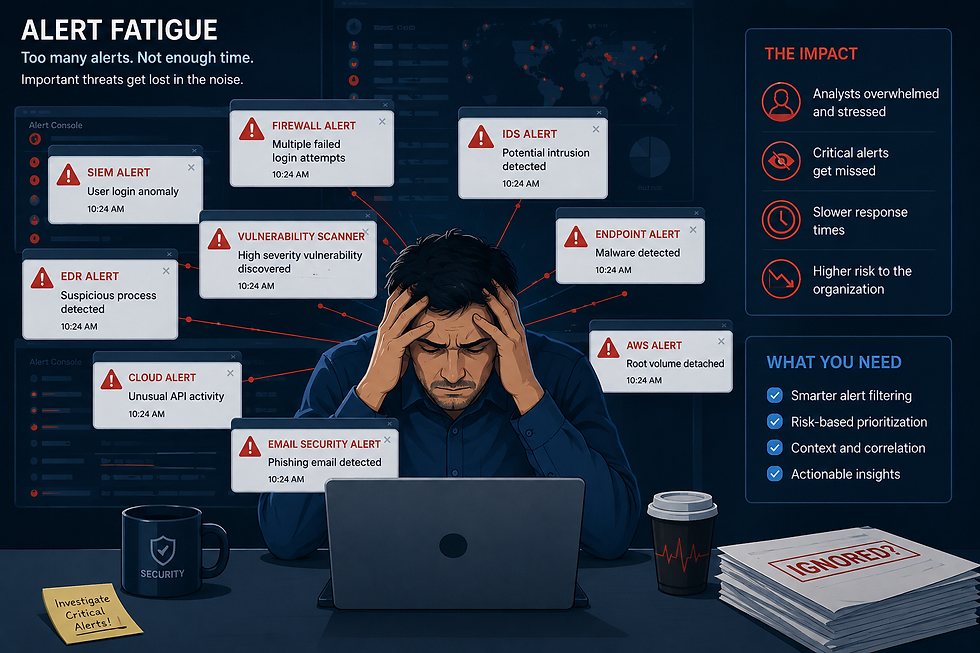
Alert fatigue from overwhelming security signals
Inconsistent investigation processes
Delayed containment actions
Increased downtime and business disruption
Even highly skilled security teams struggle when tools, data, and processes are disconnected.
The Modern Incident Response Lifecycle
1. Detection & Alert Ingestion
Security tools continuously generate alerts from endpoints, cloud environments, applications, identity systems, and networks.
The objective is early threat identification before attackers can escalate or spread.

Key Goals
Detect suspicious activity quickly
Aggregate alerts into a centralized platform
Reduce noise through correlation and enrichment
2. Triage & Prioritization
Not every alert represents a true incident. Security teams must determine which events require immediate action.
Modern IR platforms enrich incidents with:
Asset criticality
Threat intelligence
Vulnerability context
User behavior analytics
Business impact data

Key Goals
Eliminate false positives
Prioritize high-risk threats
Focus analysts on meaningful incidents
3. Investigation & Analysis
Security analysts investigate the incident to determine:
Root cause
Scope of compromise
Impacted systems
Lateral movement
Threat actor behavior

Key Goals
Understand the full attack path
Identify affected assets and users
Gather evidence for remediation and reporting
4. Containment & Remediation
Once the threat is understood, organizations take action to stop the attack and prevent further damage.
Common response actions include:
Isolating compromised devices
Disabling user accounts
Blocking malicious IPs
Removing malware
Patching vulnerabilities

Key Goals
Stop the spread of the attack
Remove malicious artifacts
Restore operational stability
5. Recovery & Continuous Improvement
After containment, systems are restored and operations resume. But the process should not end there.
Mature security teams conduct post-incident reviews to identify:
Process gaps
Control failures
Automation opportunities
Training needs
Improvements to detection logic

Key Goals
Strengthen future response readiness
Improve detection and response workflows
Reduce future incident impact
How ServiceNow Enhances Security Incident Response
Platforms like ServiceNow Security Incident Response help organizations shift from reactive firefighting to coordinated, intelligence-driven security operations.

Core Capabilities
Automated Workflows
Automatically route incidents to the correct teams and trigger response actions immediately.
Response Playbooks
Standardize investigations and remediation steps for common threats like phishing, malware, ransomware, or insider threats.
CMDB Integration
Connect incidents to business services and assets to understand operational impact in real time.
Threat Intelligence Enrichment
Use external threat intelligence to prioritize incidents based on real-world risk and active exploitation trends.
Centralized Visibility
Track the entire incident lifecycle from detection through closure within a single system of record.
The result is a unified security operations workflow that improves collaboration between security, IT, operations, and leadership teams.
The Business Impact of Mature Incident Response
Organizations with mature incident response programs consistently achieve measurable improvements across security and operations.
Key Benefits
Faster Mean Time to Detect (MTTD)
Faster Mean Time to Respond (MTTR)
Reduced operational downtime
Lower breach-related costs
Improved regulatory compliance
Stronger cross-functional collaboration
Better executive visibility into cyber risk
Incident response is no longer just a security function—it is a business resilience strategy.
Common Incident Response Pitfalls
Even organizations with strong security tools can struggle if foundational processes are weak.
Common Challenges
Lack of Defined Playbooks
Without documented procedures, teams respond inconsistently during high-pressure situations.
Poor Asset Visibility
Organizations cannot protect systems they cannot identify or properly classify.
Alert Fatigue
Security teams waste time investigating low-quality or duplicate alerts.
Limited Automation
Manual workflows slow down response and increase the likelihood of human error.
Technology alone is not enough. Success requires alignment between people, process, and platform.
What Mature Incident Response Looks Like
A modern incident response program is:
Risk-Driven
Focused on business impact rather than simply responding to alerts.
Automated
Reducing repetitive manual tasks and accelerating investigations.
Integrated
Connecting security tools, IT workflows, asset data, and threat intelligence.
Continuously Improving
Learning from every incident to strengthen future response capabilities.
Organizations that embrace this model become more resilient, efficient, and prepared for evolving threats.
Final Thoughts
Cyber threats are becoming faster, more sophisticated, and increasingly disruptive. Organizations can no longer rely on fragmented processes or reactive workflows.
Security Incident Response must evolve into a structured, automated, and intelligence-driven capability that supports both security operations and overall business resilience.
Platforms like ServiceNow enable organizations to modernize incident response by centralizing workflows, improving visibility, and accelerating remediation efforts.
The question is no longer whether your organization will face a cyber incident.
The question is: How prepared will you be when it happens?
Ready to Improve Your Incident Response Program?
Whether you are building a new Security Operations capability or optimizing an existing environment, the right strategy, automation, and platform integration can dramatically improve your organization’s ability to detect, respond, and recover from cyber threats.


Comments